


Latest Registered Members


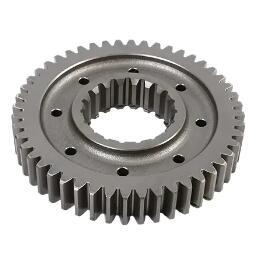
Transmission gears play a crucial role in the functioning of various mechanical systems, particularly in automobiles and machinery. Here are some advantages of transmission gears:
Torque Conversion: Transmission gears allow for the conversion of torque between the engine and the wheels or driven components. By adjusting the gear ratio, gears can effectively increase or decrease the torque output from the engine to match the requirements of the load. This enables efficient power transfer and optimal performance.
Speed Variation: Gears provide the ability to vary the speed of rotation between the input and output shafts. By selecting different gear ratios, the rotational speed can be increased or decreased as needed. This is essential in applications where a range of speeds is required, such as in vehicles where different speeds are necessary for acceleration, cruising, or climbing hills.
Mechanical Advantage: Gears can amplify or reduce the force applied to a system. By using different gear sizes and ratios, the mechanical advantage can be adjusted to achieve the desired output. This is particularly useful in heavy-duty applications, where high torque is required for tasks such as towing, lifting, or operating machinery.
Efficient Power Transfer: Transmission gears enable efficient power transfer from the engine to the wheels or driven components. By optimizing gear ratios, frictional losses can be minimized, resulting in higher overall mechanical efficiency. This translates into better fuel economy and reduced energy wastage.
Control and Adaptability: Gears provide precise control over the motion and power delivery in a mechanical system. They allow for smooth shifting between different gears, enabling the operator to adapt to changing speed and load conditions. This enhances vehicle performance, responsiveness, and maneuverability.
Durability and Reliability: Transmission gears are typically made of durable materials such as hardened steel, capable of withstanding high torque and repetitive motion. With proper maintenance, gears can provide long-lasting and reliable performance, ensuring the overall longevity and efficiency of the system they are a part of.
Overall, transmission gears offer advantages in terms of torque conversion, speed variation, mechanical advantage, power transfer efficiency, control, adaptability, and durability. These benefits make them indispensable in various applications, contributing to the smooth and efficient operation of mechanical systems.
Comments